Judging Judges
A visual analysis on the ideology of U.S. Supreme Court Justices
The Supreme Court of the United States
The Court is the highest tribunal in the Nation for all cases and controversies arising under the Constitution or the laws of the United States. As the final arbiter of the law, the Court is charged with ensuring the American people the promise of equal justice under law and, thereby, also functions as guardian and interpreter of the Constitution. The Constitution is the supreme law of the United States. It defines the branches of government and the basic rights of citizens.
Interpreting the Law
"Independence means you decide according to the law and the facts." - Stephen Breyer
It is the Supreme Court's role to interpret the Constitution, serving as the final arbiter in questions of federal law and constitutional principles. This responsibility requires justices to navigate complex legal and societal issues while remaining faithful to the text and spirit of the Constitution. However, their interpretations are shaped by differing judicial philosophies.
Living Constitution (Pragmatism)
Views the Constitution as a dynamic document that evolves to address contemporary issues. It emphasizes adaptability to modern values and societal progress, and considers broader implications and practical consequences of rulings.
Originalism
“The Constitution is a written instrument. As such its meaning does not alter. That which it meant when adopted it means now.” ― Antonin Scalia
Interpreting the Constitution based on its meaning at the time it was written and ratified. It seeks to preserve the framers' intent, emphasizing stability and limiting judicial discretion.
Case Study: 2nd Amendment
Originalists believe the Second Amendment protects an individual's right to own firearms for self-defense, as originally intended, with minimal restrictions. Advocates of the living Constitution argue it must be interpreted in the context of modern circumstances, balancing gun rights with public safety and addressing issues like gun violence.
What is an MQ Score?
Martin-Quinn (MQ) score is a dynamic measure of the ideology of U.S. Supreme Court Justices based on their voting patterns. The method monitors which justices vote together consistently and which justices vote differently consistently to establish opposing ideologies. Justices that vary more with who, of the other justices, they vote with would trend towards the ideological center. The measurement is based on Markov chain Monte Carlo methods and can predict the patterns of justice voting with 75% accuracy.
MQ scores are solely based on justice voting patterns and no characterization of the politics or ideology of cases is used by the model. By not using characterizations of the cases the method is more robust in terms of not relying on qualitative measures, but may lose fidelity by not distinguishing pivotal case decisions. Additionally, the authors label the opposing ideological poles “liberal” and “conservative” based on how well they align with known ideologies of justices but the ideological poles the model outputs may be a more nuanced description of justice voting behavior.
How are MQ Scores Calculated?
Let's further illustrate how MQ scores are calculated through a simplified visual example.
Initial state
Assuming judges initially have no voting record and an MQ of zero
Voted in Favor
None
Voted Against
None
US enters World War II following attacks on Pearl Harbor
geopolitical tension and struggle for influence between US and the Soviet Union begins
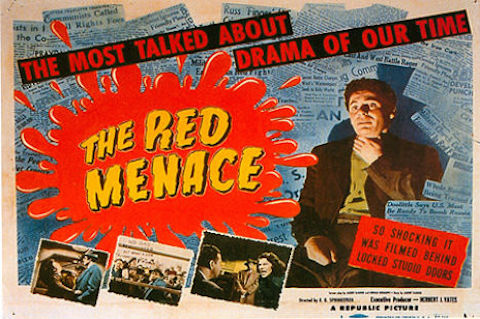
the political repression and persecution of left-wing individuals and a campaign spreading fear of communism
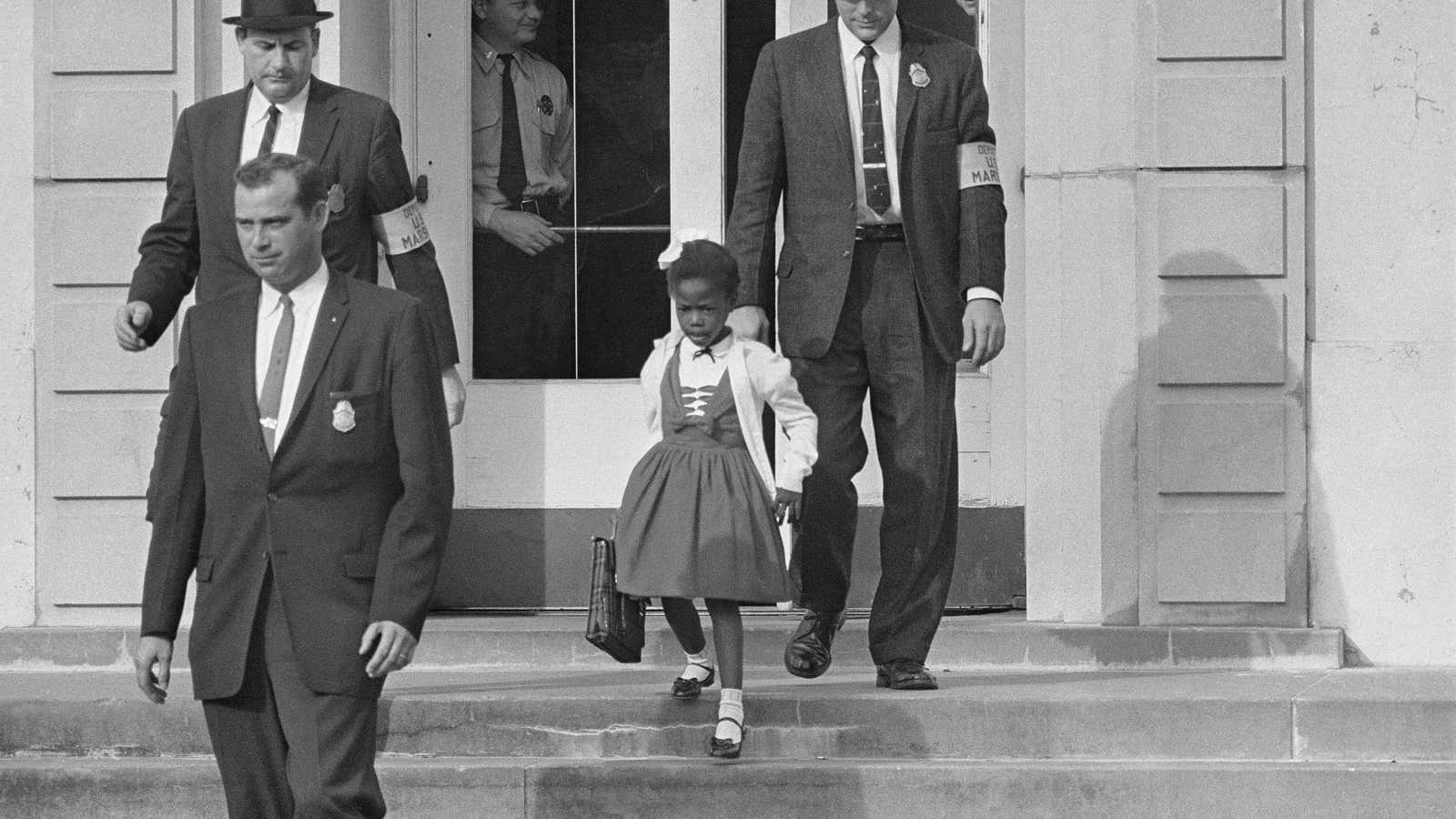
racial segregation in public schools was unconstitutional
States cannot nullify decisions of the federal courts.
School initiated-prayer in the public school system violates the First Amendment.
U.S. Constitution requires states to provide legal representation to criminal defendants who are unable to afford their own
In order to prove libel, a public official must show that what was said against them was made with actual malice.
the Court held that detained criminal suspects must be informed of their rights prior to police questioning
laws banning interracial marriage violated the Equal Protection and Due Process Clauses of the Fourteenth Amendment
Marked by the assasinations of MLK, JFK, and violence against anti-war protestors in Chicago

The twenty-sixth amendment to the US constitution established the minimum voting age as 18
Sandra Day O'Connor becomes the first woman on the U.S. Supreme Court
Students have a reduced expectation of privacy in school.
Students do not have a First Amendment right to make obscene speeches in school.
Berlin wall is taken down marking the end of the Cold War

copyright, commercial fair use is possible, parody
racial gerrymandering declared unconstitutional
vote recounts in presidential election, the only court decision to determine the winner of a presidential election
Patriot Act, increasing law enforcement agencies' ability to conduct searches in cases of suspected terrorism. Agencies were enforced
It is cruel and unusual punishment to execute persons for crimes they committed before age 18.
prohibits the imposition of the death penalty for a crime in which the victim did not die and the victim's death was not intended.
the First Amendment prohibits the government from restricting independent expendituresfor political campaigns by corporations
Police must obtain a warrant in order to search digital information on a cell phone seized from an individual who has been arrested.
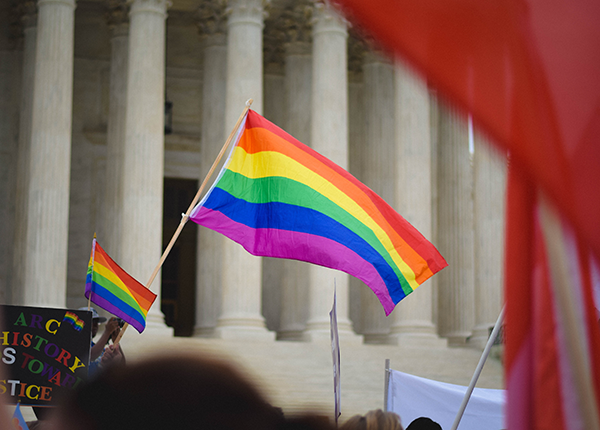
same-sex marriage is legalized nationwide
In Dobbs v. Jackson Women's Health Organization the authority to regulate abortion is returned to the states